Miyerkules, Abril 25, 2012

Emma Stone: Provocateur, Advocate.


With all the young talent emerging from the Hollywood canon, at least one of them is smart. Already a major movie star, Emma Stone broke out in the (thinking) industry with Easy A in 2010. I have no probs with the film. It is intelligent. Almost unbelievable, but intelligent. Showing off brilliant comedic timing and witty lines, the meme-rific film almost swallowed whole its juicy concept: teenage sexuality in a conservative social arena. Emma plays Olive, the modern day Scarlet Letter heroine. But she’s very intelligent to know that her own intellectually-restrictive town needs some provoking, and she didn’t care much until she herself became the cause celebre of hypocrite Jesus freaks. The Olive character stood up against the grating anger of the town towards floozies (a setting very familiar here in the Philippines: just the other month, a group of teenage girls almost didn’t graduate because of this chaste image) and she did it by being more provocative. She cut her clothes shorter and wore the red A on every single blouse and shirt, with false sex rumors she intentionally spills for boys’ image charity. She did come around as, to quote a character in the film, a “super slut”. I guess the provoking part did emerge, but what about its resolution? Her whole gesture only seemed like a tease. The Christian high school finally had an erection, but neither was the metaphorical penis castrated or ejaculated. With all the men complaining why there were no tits on her live blog, it shows that the high school didn’t learn a thing from Olive when they should: hmm there are plenty but let’s start with this “How hard it is to be an outcast” or “The one thing that trumps religion… capitalism.”, also “Whatever happened to chivalry?” or finally “Ew. People suck.” What they only learned is that she did not sleep with all those boys, and how much she’s sorry for it. Then again, for the sake of the film’s optimism, what Olive did for the dorky boys she said she slept with is her willingness to avoid bullying (obvious with the gay friend) and to prove that the world has (in some ways) moved on: the nerds are sexier now! The girls can be free with their sexuality! The internet is magnificent! 


The following year, she starred in the screen adaptation of The Help. When she played Eugenia “Skeeter” Phelan, Emma Stone went from Lolita Haze to Atticus Finch. Now she’s a Southern 60s writer in a racist community. But like Olive, she’s ready to break norms. Following the dismissal of her maid Constantine (played by Cicely Tyson) and her friend Hilly’s (Bryce Dallas Howard) continuing bitchery towards the colored help, she started to write a book for black maids who serve the white families of Jackson, Mississippi. Skeeter says it would be different because she will write the situation in the perspective of the help. She interviews two maids (played by Viola Davis and Octavia Spencer in career-best performances) which eventually boosted to more than 20 when the racism in the community increases even more. As expected, Jackson read the book (the sequence showing various women reacting to familiar parts of the book is almost like a shot-for-shot remake of the men reacting to Olive’s blog in Easy A) and warmed-up to the help, honoring them with fried chicken. The colored situation has been told before in the screen, but not with this much gloss and entertainment. The Help is a sugar-coated look at the 60s’ racist issues, but I can’t doubt the half-sincere intentions of the filmmakers. Not with beautiful scenes of two abused maids laughing at the idiocy of the whites, a funny scene with toilets and the role of Jessica Chastain as a white-trash blonde who’s socially colorblind.


Emma Stone’s performance in The Help wasn’t as strong as her portrayal of Olive Penderghast, but it may prove that Stone is intent with playing roles that challenge their surroundings. You wouldn’t know if these are just her own Hollywood gimmicks for relevance, swag or legitimacy but I smiled at Olive and Skeeter not because they were ideal princesses. They surprised me with their willingness to escape the norms, exercise democracy, get dirt in their skirts and lose some on their way. The fate of Skeeter was to be a successful writer in New York, save Jackson from the height of racism and lose the man she didn’t even want. Her individualism is admirable. These roles are real, and with what they do, their intelligence lets them win over the oppression and the stupidity of their communities. And as with Emma Stone, while she enjoys more of the Hollywood glamour, I hope she would also learn from these characters and find her way towards the advocacy for a better, democratic society. Perhaps with less gloss? - Gio Potes, April 2012

Linggo, Abril 8, 2012

RIHANNA'S FEMINIST CHALLENGE: The Madgestic RiRi


"I want to be the black Madonna."


It's obvious why. Not only does Rihanna have every potential to be as successful as Madonna (commercially, at least), she's taking part in an industry Madonna defined: that of female pop culture. A rainmaking single plus a tour on the run, Rihanna already covered a quarter of her idol's success after the release of her third album "Good Girl Gone Bad". The title of the album is a departure itself from the last two RiRi albums, especially the second one, "A Girl Like Me". It let her shift from image to another and focus more on the celebrity rather than the music - that's exactly how Ms. Ciccone liked it.


Her blond ambition was clear with "Take a Bow". From the criminal-to-good girl of "Unfaithful", she now claims the position of the cheated girlfriend. The quality of the song was mixed as it followed the trend set by Beyonce's "Irreplaceable", itself an empowerment anthem devoted to bash cheating boyfriends. But despite its musical limitations, "Take a Bow" makes up for style. It is heavily Madonna-influenced from the title alone (the song is not a cover), and the promotional video is notable for her shift in fashion sense.


As Douglas Kellner researched, fashion is a capitalist industry aimed at defining classes in terms of dress code. It aimed a separation classes ("rich" from "poor", men from women) that mostly oppressed and limited. It dictated while it provided. And through the years, the fashion industry was challenged by some who chose to wear something else.  Judging from Kellner's research and her Madonna connection, Rihanna takes the gender-bending role reminiscent of Madge's own "I'll Remember". In the video of the song, Madonna wore men's formal clothes and a short black wig. In short, she looked like a typical businessman. Cultural critics found the style of the video as feminist, continuing Madonna's early 90s provocation of sexual stereotypes.


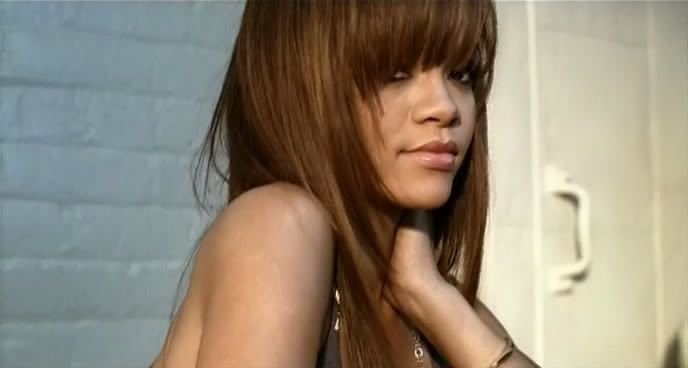
With the "Take a Bow" video, Rihanna donned a pixie cut and a Michael Jackson jacket which made her look entirely different from her previous fashion statements."You're so ugly when you cry" she sings in the second verse, looking down at masculinity while inhibiting a macho female persona evident in the NeYo-esque gestures. It's obvious that once again, Rihanna exhibits empowerment within the video. Like Madonna's early 90s efforts, Rihanna challenged norms of style for women, though it wasn't pretty much of a stretch now as it was then. It's no surprise that this new image became one of her most popular. Around 2008 til 2009, the short black pixie cut became the new fashion phenomenon for teenage to twentysomething girls and gay men alike.


I must say Rihanna chose the right role model to follow. "Take a Bow" may not be as shocking as "Unfaithful", but it made Rihanna a trend-setter, at least within fashion. Based on what she did there, that's not a bad thing for a pseudo-feminist. - Gio Potes, March 2012

Lunes, Abril 2, 2012

THE ROYAL HUNGER


Films in point: The Hunger Games (Ross, 2012), Battle Royale (Fukasaku, 2000)


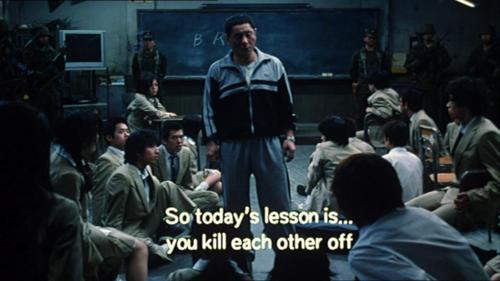
Regarding all this buzz about a film where kids kill each other off for the viewing pleasure of some capitalists, any of you guys remember such a Japanese film called "Battle Royale"?


I haven't seen these two films but I found the success of "The Hunger Games" as good news. It's quite a surprise teenagers are buying the politically-rich context of "The Hunger Games". It's about classes battling it out, and it's quite feminist as well. Flashback 12 years ago and there's "Battle Royale". The film took everything "Hunger" bears to the extremes even before everything about the latter was outed. It's about a battle of classes in a private high school where the children must kill each other under the order of their teacher and the authoritarian government. If not, the teacher himself will have to kill them. I must say, the violence here is unbearable. You can almost feel every hit and bleeding because it's that graphic of a film. The Japanese, they totally know how to conceive horror!


"Battle Royale" gave a rough, exaggerated view of the new millennium's dangerous fascination. "The Hunger Games" may as well be the mainstreamed "Battle Royale". It's graphic but it is conceived within the microscope of Hollywood meaning it's a softer, toned-down reflection of society. I just hope that this new pop culture phenomenon won't end up as just another money-making franchise, but one that would enlighten the thousands of die-hard fans about the condition of their own environment, of their own media fetishes.


With that, "The Hunger Games" surely is worth a watch.

Linggo, Abril 1, 2012

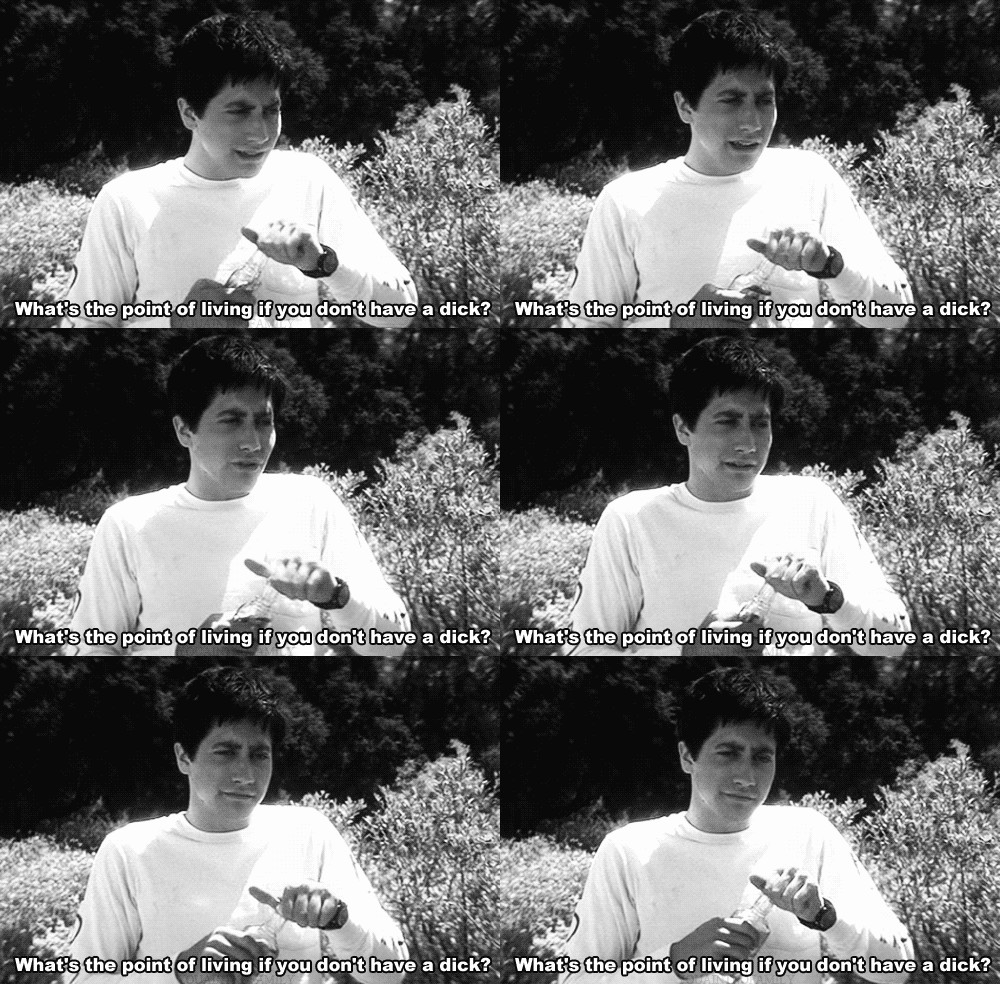
Donnie Dicko


"To summarise briefly, the function of woman in forming the patriarchal unconscious is two-fold: she first symbolises the castration threat by her real absence of a penis, and second thereby raises her child into the symbolic."

- Laura Mulvery, Visual Pleasure and Narrative Cinema (1975)

Linggo, Marso 25, 2012

RIHANNA'S FEMINIST CHALLENGE: An Unfaithful Girl Like Me


In the midst of a series of disco-infused pop singles within two years, the Barbadian r&b/pop singer Rihanna released a rather odd ballad called "Unfaithful". In the MTV's review of the 2000s, it ranked as one of the best singles of the decade. But pop observers found it incredibly strange at the time. The song is unusual in many ways. First of all, it's a cold haunting song guided by piano chords reminiscent of the band Evanescence. It is about a girl who's becoming a "murderer" - perhaps figuratively, a killer of affection. This concept was much talked about within circles of music scholars because it unconventionally featured a girl in the position of the emotional abuser, and it produced a music video that ignited the flame even more. Yet they dismissed this moment as a talent show-off, that slowburn within pop albums intended to expose the vocal range of the artist. Following her own preservation of dance music in the charts, critics like Sal Cinquemani found the ballad "fucking weird". For me, it's a milestone in Rihanna's career.


Reading the lyrics, one would agree with Cinquemani's observation. In the first verse, she speaks of "searching for the 'Right'" but she assumes that "''Wrong' really loves her company". Then enters the subject of the song: a certain "He". Towards the refrain, it becomes obvious that she is indeed cheating "him". Yet the chorus suggests that she does not want to continue because she considers cheating the honest man as a form of murder. This is a young lady exposing her guilty pleasure, and you can see her confusion in her play of words: "Our love/His trust/I might as well take a gun and put it to his head/Get it over with/I don't wanna do this anymore".


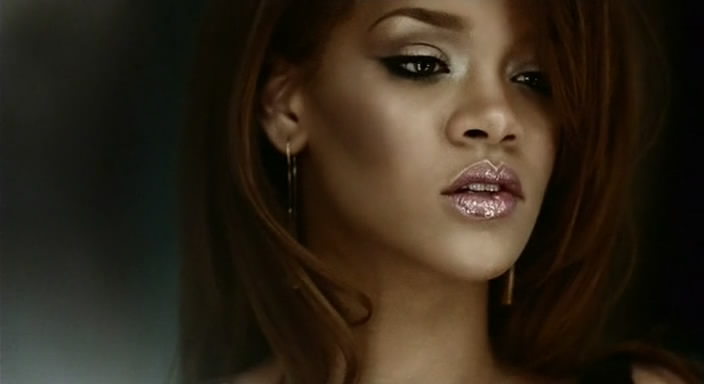
Yet the real departure from the usual Rihanna image comes in the music video where the already dark theme of the song is given a much deeper visualization. It must be noted that she was only 18 when the video was shot, which is another reason why the whole thing about "Unfaithful" became immensely awkward. The video starts with the girl dressing up. Clad in a black fit sleeveless dress, she's vain and titillating. Then on a close-up of the visage, you can see cold beauty. She almost looks like Beyonce, older and maturer than her age yet maintaining a certain Lolita sexiness. Rihanna follows the song's narrative in not going all the way to violence (unlike what happened to the Adrian Lyne film of the same title, obviously an influence). We find the girl tiptoeing around with a white pianist but in the end, she goes back to her faithful man. She embraces him with a facial expression suggesting the guilt aforementioned, but it changes into a sincere smile - this time, she'll be more loyal.


The coming of this moment suggested a whole new different image from the Barbadian singer. It was probably an awkward presence in pop music at the time because it wasn't expected of the artist and it presented a new concept. "Unfaithful" placed Rihanna in the shoes of what seems to be a femme fatale inches away from dangerous crime. Succeeding the blissful "SOS" single, the image here bears the same sexual exposure but it's more confident. The maturely slick physique is perhaps a weapon, a magnet that attracted the likes of two men. And it's probably this sexuality that she is trying to avoid usage.


More notable is the fact that the video presents: that women can also take this side of the relationship. Rihanna's role in this is pretty much a gem - yes, the object of male gaze, but in power and never subverted. Not that I'm endorsing infidelity as a good thing but the way she presented this flipside to the conventional situation calls a much bigger and realistic picture of the nature of complex relationships. One that would call to mind the rise of "friends with benefits" where both male and female agree on the sex but not on the love, hence an issue that threatens the strength of heterosexual union.


The reason why I consider it a milestone in her art is because at the time when she was about to be labeled as just another pop dance flash-in-the-pan, she started off what would be a series of sexually-challenging work. In a ripe age of 18, a pop singer would follow the Lolita example most prominent with Britney Spears, but Rihanna (much like Beyonce) begged a more richer and political presentation of the female. It can also be read as a representation of the neo-colonialism of Barbados (she is smitten by a "white" pianist for a reason) but that's another thing. With "Unfaithful", she has launched a fierce statement against abuse. And as her discography moved along, it got richer and more profound.


- Gio Potes, March 2012

Biyernes, Marso 23, 2012

Rihanna’s Feminist Challenge


“I maybe bad, but I’m perfectly good at it.”


Despite all claims that Rihanna is just another pop tart in the music industry, I’d like to argue that she boasts a handful of brilliant songs and corresponding videos that distinguishes her from that list. Not only does she manage to conceive catchy hooks (or maybe Def Jam does that for her), she also captures an era of feminist struggle within her artifice.


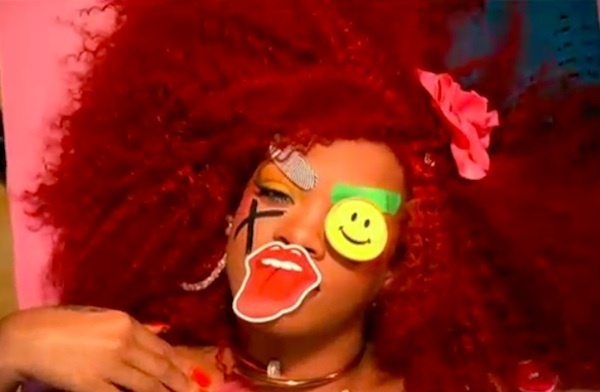
In the middle of her young seven-year-old career, she has included in her art feminine modes of guilt, abuse and (finally) sexual liberation and dominance. Half of her popularity is due to the fact that she is a victim of abuse. The much-talked about domestic violence Chris Brown has committed towards the young pop star back in 2008 garnered so much media attention that it scarred the careers of both artists. But to her benefit, Rihanna used the music and visuals to escape the demons of the incident. The recorded songs and videos provided an in-depth approach to her condition. In return, the incident was followed by two dark and personal Rihanna albums. From ‘Rated R’ to ‘Loud’, the artist brought to the mainstream different forms of counterattack both allegedly to Chris Brown and the media, all the while exploring her own sexuality and challenging social norms, not to mention blossoming before the eyes of the audience and winning back loads of cash and undeniable fame.


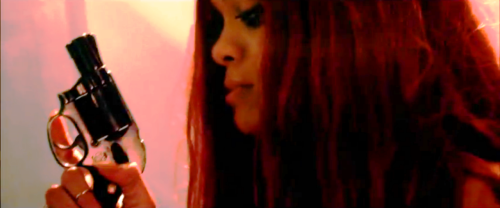
Yet more significantly, these songs and videos present a good girl gone bad. Bad in a sense that she is not the normative kind of artist, one who sings for the excitement of consumers, (well that is still something to debate on) but a woman who has experienced one of the hardships brought about by a patriarchal system. In a way, the incident and the art that emerged out of it made way for personal statements that women can relate to. Rihanna’s flesh-flashing is not an empty consumerist strategy, too: it’s part of her messages. And whether it is the cause or the effect of her feminist challenge, I can say that it is necessary. And notably after years of these feminist modes, the Barbadian artist tops off her ventures with a solution: a gunshot - the sound of freedom from oppression and vengeful Fury against the oppressor.


Which all raise the question: is Rihanna a feminist?


This summer, I am going to study the feminism surrounding Rihanna’s aesthetics. Starting from the release of ‘Unfaithful’ as a single ‘til the music video of ‘Man Down’ gets banned from several TV stations in the US, the study aims to discover how Rihanna represents female struggles and the 2010s Girl through pop music (which is generated through MTV and the internet: YouTube, Twitter, etc.). Though it’s possible that this era of thought within Rihanna’s career would reach deeper trenches as she grows older and wiser, I believe the incidences surrounding ‘Man Down’ concludes an initial period of feminism that Rihanna herself seemed to emphasize in the first place. Thus, I will focus on the artist’s fruitful middle career right after ‘Music of the Sun’ and before ‘Talk that Talk’. Yet it is still a huge question what exactly Rihanna wants her audience to take from her musical and visual output. For me, she gives women a new understanding of their condition, and solutions for them to fight it.  - Gio Potes, March 2011.


Ganda's Sarcasm


“May nag-blog!”


The rise of Vice Ganda didn’t only offer a new viewpoint of homosexuals in the Philippines - it gave the country a new infectious taste of hilarious sarcasm.


It’s not new to learn that we, Filipinos, mostly ask questions with obvious answers. You see your brother soaking wet after walking under heavy rain and you ask “Naulanan ka?”. You smell the food your mother is cooking and then you ask “Ma, nagluluto ka na?”. And you let a person inside your karinderya and you suddenly ask “Kakain po kayo?”. Vice Ganda, a stand-up comedian now a red-carpet delight, is clearly sick of these and so came his contribution to the endless prominent catchphrases composed of two words ending with an angry exclamation point: “AY, HINDI!”


And surely, even you have been a victim. Vice Ganda’s growing exposure (because of noontime television’s Showtime and soon his own talk show, Gandang Gabi Vice, probably a Pinoy gay counterpart to Ellen) planted a new popular way of speaking in Pinoy pop culture. Boys, girls and gays alike are using this, probably as a way of showing superiority or just to fool around.


Vice shows another concrete example of how gays in the country are indeed one of the most influential sources to new ways and forms of communication. There’s the gay lingo, and now this Vice Ganda-stamped sarcasm that are humorous but are, most importantly, colorful evidences of the Filipino language’s dynamism. Call it destructive, crude or frustrating, you probably just get fooled by it all the time. AY HINDI! - Gio Potes, September 2011